


Beyond the Last Mile: Why Locally Led Adaptation Requires Funding the Whole Ecosystem
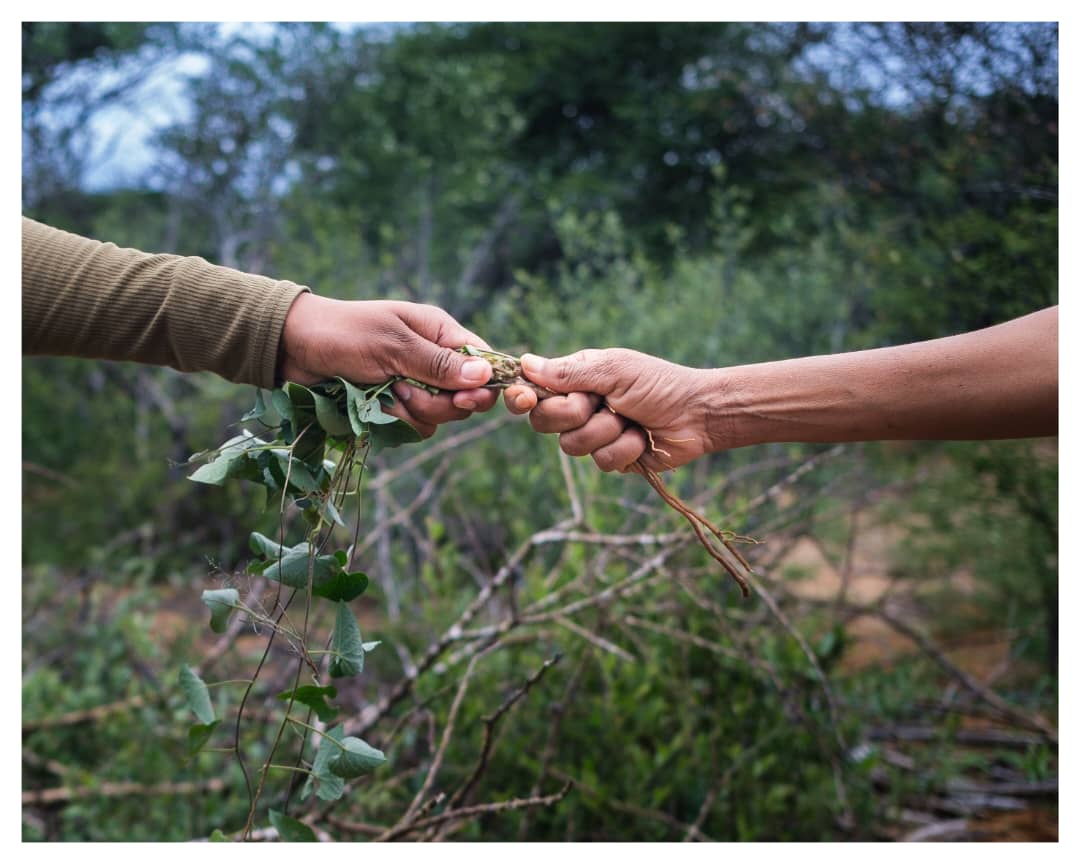
Co-written by the International Institute for Environment and Development (IIED) and the Global Alliance for Green and Gender Action (GAGGA).
As mainstream climate finance actors increasingly embrace locally led adaptation (LLA), the challenge has shifted from simply recognising the importance of local leadership, to translating that commitment into how programmes are designed, funded and governed.
Upcoming discussions on adaptation and finance at COP31 offer an opportunity to rethink what it will take to make adaptation action genuinely locally led. The status quo narrative on LLA recognises the value of local knowledge and participation but often leaves the underlying architecture of climate finance unchanged. Directing funding towards local organisations is important, but it is not enough. Local actors are expected to deliver results within externally determined priorities, funding cycles and accountability frameworks, while donors retain control over resources and decisions.
The challenge is therefore not simply to increase local participation, but to change who holds power over adaptation priorities, resources and accountability. Genuine LLA requires broader changes in the climate finance landscape to shift decision-making power, invest in the wider ecosystems that sustain local leadership, and interrogate the role of Global North-based organisations.
From local implementation to local leadership
LLA is often understood as an approach that brings decision-making on climate finance and programmes closer to the communities most affected by climate change. But proximity alone does not constitute local leadership. A programme does not become locally led simply because local organisations implement its activities, community members participate in consultations or adaptation solutions are delivered at the grassroots level. If priorities, budgets and results frameworks are determined elsewhere, local organisations remain beneficiaries rather than decision-makers.
Genuine LLA means that communities and the organisations they are part of have meaningful influence over which challenges are prioritised, how resources are allocated and what success looks like. It also requires recognising that local power structures are not inherently equitable. Women, Indigenous Peoples and other marginalised groups most impacted by climate change must have the authority to shape the decisions and resources affecting their lives.
This approach is reflected in the eight Principles for Locally Led Adaptation, which call for devolving decision-making to the lowest appropriate level, addressing structural inequalities, providing patient and predictable funding, and ensuring transparency and accountability. These principles challenge not only how adaptation projects are implemented, but also the institutional arrangements through which decisions and resources flow.
Women-led and Indigenous organisations play a critical role in this process. They do more than represent particular groups in adaptation planning: they organise collectively, generate knowledge grounded in lived experience, challenge unequal access to resources and build the capacity to influence decisions beyond individual communities.
For example, the IIED report The Global South House at COP30: Lessons, Barriers and the Path Forward documents how Global South funds are developing financing models that place local leadership at the centre of resource allocation. Brazil’s Fundo Podáali, an Indigenous fund operating in the Amazon, is guided by an assembly of nine leaders from the Indigenous regions where it works. Its governance arrangements place Indigenous leadership at the centre while providing dedicated structures for financial oversight and advice. This illustrates how locally led adaptation depends on institutions that enable communities to govern resources and shape decisions, rather than simply implement externally financed activities.
Fund the ecosystem, not just the intervention
LLA does not happen through isolated projects. It depends on an ecosystem of organisations, relationships and institutions that enables communities to identify priorities, access resources, develop solutions, learn from one another and influence the decisions shaping their environments.
The work of the Global Alliance for Green and Gender Action (GAGGA), established in 2016 through a partnership with the Dutch Ministry of Foreign Affairs, illustrates the importance of this ecosystem. By channeling flexible funding through a network of women’s funds, socio-environmental funds and environmental NGOs based in the Global South, GAGGA supports women-led community organisations while investing in the relationships, organisational capacity and collective advocacy that enable their work to influence broader systems. Since 2016, GAGGA has channelled more than €50 million in flexible, long-term funding to 2,590+ women-led organisations across 60 countries, supporting not only community-level action but also the infrastructure for collective learning, advocacy and movement-building.
GAGGA’s approach illustrates the role of effective intermediaries in LLA: making finance accessible, strengthening local organisations and connecting community priorities with wider policy and funding decisions. Yet organisational development, networking, advocacy and collective learning are often treated as secondary costs rather than essential adaptation infrastructure. Without sustained investment in these functions, locally developed solutions risk remaining fragmented and short-lived, with limited influence over the policies and financial flows that shape climate vulnerability. The experience of Global South funds documented in IIED’s 2026 report illustrates how centring locally rooted knowledge and building relationships with financing mechanisms helps community organisations access resources, strengthen their capabilities and influence wider decisions. Recognising and building on this existing infrastructure is essential: Global South funds should be supported as institutions that enable local leadership, not treated merely as delivery channels for externally designed programmes.
A briefing by IIED, GAGGA and Mama Cash showcases these learnings and identifies seven characteristics to practically assess whether an intermediary is genuinely effective for enabling LLA or simply adding another layer to the funding chain:
- Providing core, flexible and long-term funding: enabling local organisations to determine their priorities and adapt their work as circumstances change.
- Acting as an advocate: bringing community perspectives into policy and funding decisions and challenging barriers to accessing finance.
- Being transparent and mutually accountable: making funding decisions, expectations and responsibilities clear, with accountability flowing in both directions.
- Embracing risk: recognising that conventional financial risk assessments can exclude smaller organisations and that withholding resources also carries risks for communities.
- Promoting inclusive spaces: ensuring that women, Indigenous Peoples and other marginalised groups can influence decisions, including within funding institutions.
- Creating opportunities for shared learning and collaboration: supporting peer exchange, collective knowledge generation, networks and movement-building.
- Building sustainability: investing in organisational capacity, relationships and longer-term institutional strength rather than creating dependence on short project cycles.
Rethink the role of Global North-based organisations
Currently, Global North-based organisations contribute technical expertise, financial management, institutional access and international advocacy. Going forward, however, their role should be defined by how they enable local leadership, not by their default position as programme designers, lead applicants or gatekeepers of funding.
This requires more than consultation or the inclusion of local partners in existing structures. It means sharing decision-making authority, improving transparency of budgets and responsibilities, and enabling local organisations to influence priorities and adapt activities. It also means providing the flexible, long-term resources needed for local partners to lead without inheriting disproportionate administrative burdens and risks.
Under the Dutch Ministry of Foreign Affairs funded ‘Generating Ambition for Locally Led Adaptation’ programme, IIED worked with partners to ease administrative burdens and took on financial risk for local organisations, enabling them to focus on implementing critical adaptation work at the community level. This included becoming a fiscal sponsor for partners of the Center for the Autonomy and Development of Indigenous People (CADPI) in Belize, Panama and El Salvador. The process was complicated due to certain partners being unregistered and not having organisational bank accounts, requiring IIED to work individually as a mentor to partners in building financial systems and providing extra budget to set up administrative structures. Through this process, partners were able to spend more time and resources on their community work while strengthening their institutional capability long term.
The question is therefore not whether international organisations should be involved, but how they can meaningfully add value while shifting rather than reinforcing existing power imbalances. Their success should be measured not only by programme delivery, but also by the autonomy, resources and influence that local partners gain. This means being willing to relinquish control, share risks more equitably, make funding decisions more transparent and use institutional access to open pathways for local organisations and funds.
Global North-based organisations have a critical role to play in building a financing ecosystem in which local leadership is adequately resourced, recognised and sustained. This requires addressing barriers to climate finance for communities: examining how criteria and power dynamics shape funding decisions, including who the burden falls on to adapt and hold risk, rather than expecting communities to adapt to donor priorities, institutional requirements and externally defined accountability frameworks.
From commitment to action
At COP31, climate finance actors must shift the conversation on LLA towards redistribution of power and resources. They can start with a commitment to flexible, long-term funding directly to women-led and Indigenous organisations and the funds that sustain them. Through financing the wider ecosystem, funders can support organisational development and collective learning and advocacy, while reforming the eligibility, reporting and accountability requirements to actually enable effective and sustainable community leadership.
The measure of genuine LLA is not simply whether funding reaches local organisations, but whether communities gain lasting power over the resources and decisions shaping their futures.