)
Extreme Heat, Health and Climate Justice: Women-Led Solutions for Resilient Communities
GAGGA has demonstrated for over a decade what gender-just, locally-led climate action looks like in practice. As a funder, convener and catalyzer, GAGGA connects women’s funds, socio-environmental funds, feminist movements and frontline organizations across the Global South, directing resources, knowledge and visibility to those closest to the climate crisis.
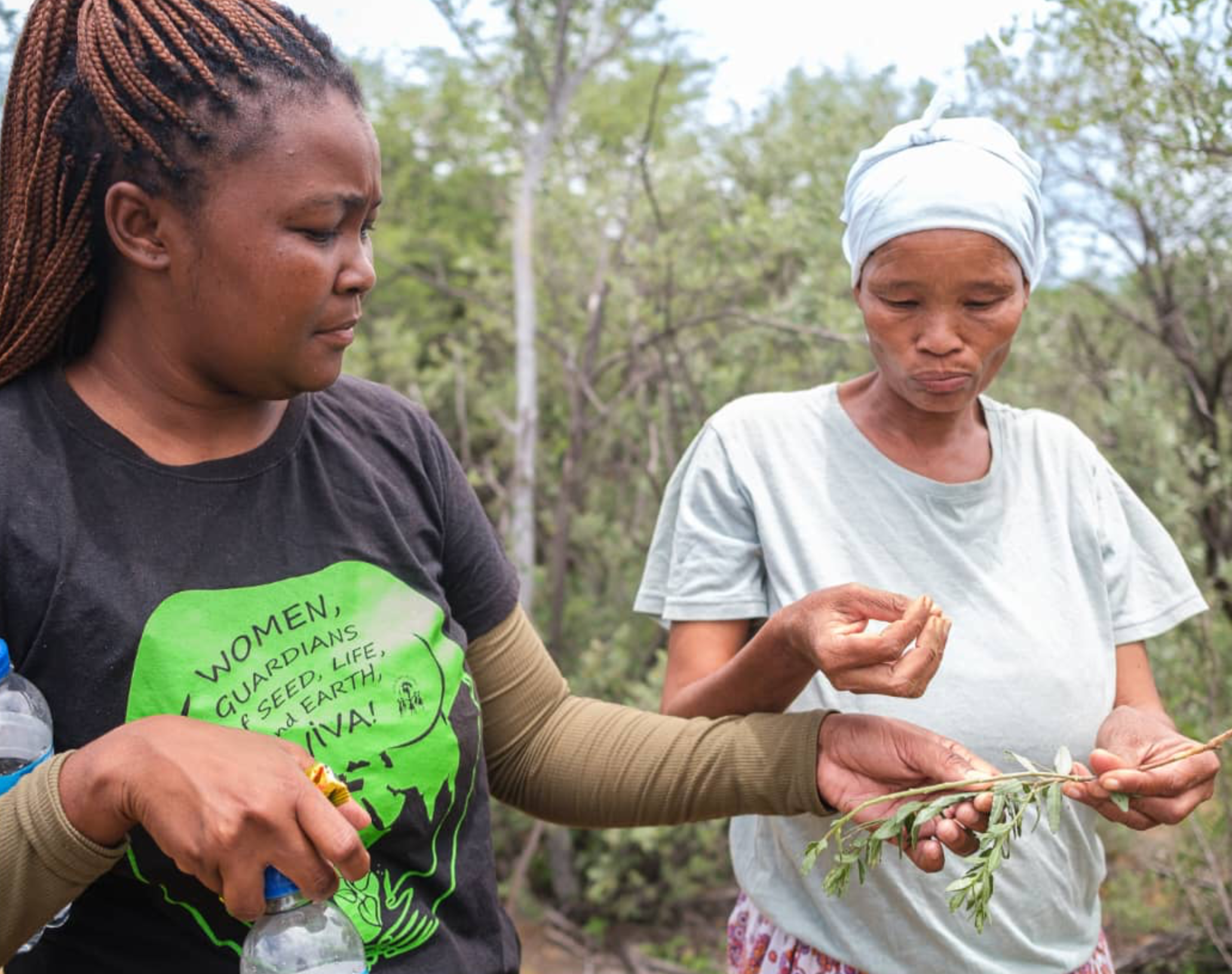
Based on this experience, GAGGA has partnered with the ClimateWorks Foundation and commissioned the development of case studies carving out the intersections of gender, extreme heat and gender-just solutions. To this end, the Association of Women Environmentalists of El Salvador (AMAES) , the African Women’s Collaborative for Healthy Food Systems (ESAFF) in Uganda, the Rural Women’s Association in South Africa, Namibia, and Zambia are currently engaged in a Feminist Participatory Action Research (FPAR) project developing case studies documenting how heatwaves disproportionately impact structurally excluded groups, exacerbate gender and other inequalities, and how they have been developing and implementing best practices and locally-led solutions for climate adaptation and heat resilience.
This publication is the first output of preliminary research findings. We gratefully acknowledge the RWA’s, ESAFF’s and AMAES’ central role in this research. All data presented was collected by RWA members, ESAFF and AMAES, who served as key experts, enumerators and contributed their knowledge, experiences and perspectives throughout the research process. RWA’s, ESAFF’s and AMAES’ contribution to the collection and generation of data, and their leadership in platforming rural women’s voices, experiences, and perspectives, are fundamental to this publication and recognized with gratitude throughout.
Small investments with great impacts. Territorial gender-just climate solutions
No next reports