


The experience of the Global Alliance for Green and Gender Action (GAGGA) suggests that transformative climate action does not begin with externally designed solutions. It grows from long-term investment in local leadership, collective organising, and funding ecosystems rooted in territories themselves. Through partnerships with feminist funds, women’s funds, and socio-environmental funds across the Global South, GAGGA has helped strengthen infrastructures capable of channelling resources directly to frontline communities while remaining grounded in trust, proximity, and collective learning. GAGGA has channelled more than €50 million in long-term, flexible funding to a network of over 2,450 women-led community-based organisations across 60 countries in the Global South. This sustained investment has contributed to over 2,360 bottom-up advocacy initiatives, 73 government policy wins, more than 175 peer-to-peer learning exchanges and the participation of over 150 Women Environmental Human Rights Defenders in global climate policy spaces.
One of GAGGA’s key partners since its inception has been Casa Socio-Environmental Fund, a Brazilian philanthropic organisation working to promote socio-environmental and climate justice, democracy, and gender and racial equity. Since its creation, Casa Fund has prioritised funding approaches grounded in proximity to territories and trust in community leadership. Rather than operating through rigid project structures, it combines flexible grants with accompaniment, peer learning, participatory grantmaking, and long-term relationship building. Communities are not treated as beneficiaries, but as political actors and co-creators of solutions.
This partnership between GAGGA and Casa Fund demonstrates how locally rooted funding ecosystems can strengthen women-led climate action over time. These lessons are strongly reflected in the Mighty Women series, a collection of three publications produced by Casa and GAGGA analysing support provided to women-led groups between 2016 and 2025 in Argentina, Bolivia, Brazil, and Paraguay.
During this period, Casa Fund supported 192 projects focused on environmental justice, water protection, food sovereignty, territorial defence, and women’s leadership. The reports demonstrate that some of the most transformative socio-environmental solutions are rooted in the leadership, knowledge, and collective action of women-led community-based organisations. Across territories, these groups generated tangible impacts – from protecting rivers and forests to strengthening community governance systems and defending food sovereignty.
But Mighty Women also reveals something equally important: these outcomes were not produced by funding alone. They emerged through long-term accompaniment, trust-based relationships, flexible resources, and decision-making rooted in local realities. Women-led climate action became sustainable not simply because communities received grants, but because they were accompanied by funding structures capable of listening, learning, and adapting alongside them.
This is where socio-environmental funds, feminist funds, and women’s funds play a critical role. Much of the debate around climate finance still treats intermediaries as bureaucratic layers between donors and communities. Yet the experiences of GAGGA, Casa Socio-Environmental Fund, and other Global South funds show the opposite. Socio-environmental funds, feminist funds, and women’s funds are not traditional donors operating at a distance from communities. Many emerged from the same feminist, environmental, and territorial movements they now support.
This approach also challenges conventional assumptions about scale.
Fundación Semilla and the multiplication of local funds
In philanthropy, ‘scaling’ is often associated with standardisation, replication, and increasing distance from communities. The experience of GAGGA and Casa Fund suggests another possibility. Scale does not have to mean centralisation. It can mean multiplication.
At Casa Fund, proximity is not sacrificed in order to expand support—it is precisely what makes expansion possible. Deep and active listening, learning exchanges, accompaniment, and collective governance mechanisms allow grassroots organisations to strengthen their own agendas while remaining connected through broader ecosystems of solidarity and shared learning. Flexible and recurring grants allow women-led organisations to respond to changing realities without constantly adapting to donor priorities. Long-term accompaniment strengthens leadership, collective resilience, and organisational sustainability. Trust-based philanthropy creates the conditions for innovation because communities themselves retain the ability to define priorities and strategies.
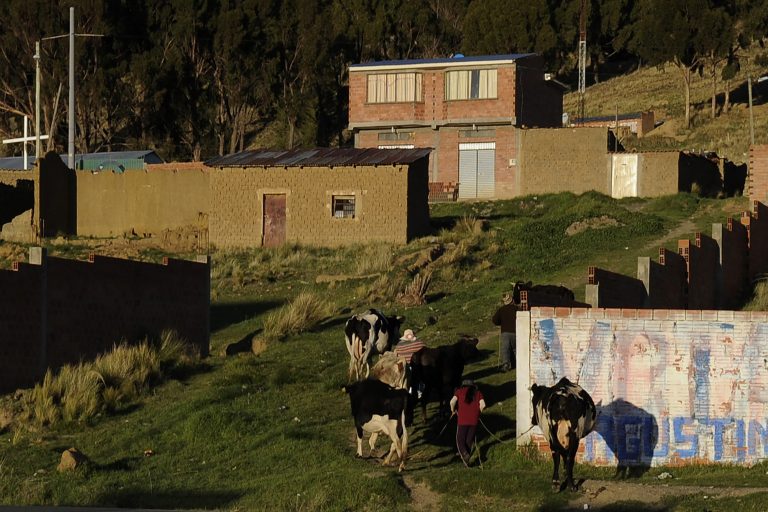
One of the clearest examples of this approach is Fundación Socioambiental Semilla in Bolivia. The trajectory of Semilla reflects how scaling within GAGGA has meant expanding locally rooted infrastructure rather than centralising power. Fundación Semilla first engaged with GAGGA as a grantee organisation. Over time, through accompaniment, exchange, and collective learning, it evolved into a national socio-environmental fund supporting grassroots initiatives in Bolivia and Paraguay.
This transformation illustrates a different understanding of scale: not reproducing identical institutional models from the top down, but enabling new autonomous funds to emerge within their own territories.
The growth of locally rooted socio-environmental funds across the Global South has helped reveal another way of thinking about scale in philanthropy: through interconnected funds deeply rooted in their territories, capable of channelling resources with proximity, trust, and long-term commitment to frontline communities. Over the past decades, experiences like Casa Fund have not only directly supported grassroots movements, but also contributed to the emergence and strengthening of new locally led funds across different regions.
Building an ecosystem of Global South funds
As this ecosystem expanded, so did the need for stronger forms of articulation, collective strategy, and political visibility among these funds. Casa Fund is also one of the founding members of the Socio-environmental Funds of the Global South (Alianza Socioambiental Fondos del Sur), a pioneering alliance launched in 2021 that brings together Global South-led socio-environmental funds across Latin America, Africa, and Southeast Asia.
Rooted in more than three decades of exchange, experimentation, and collective construction among activist funds, the alliance engages with the broader philanthropic ecosystem to challenge dominant funding models, shift power dynamics, and expand recognition of locally rooted funds as essential infrastructures for socio-environmental justice.
Today, the Alianza brings together 17 funds with deep territorial experience and distinct trajectories, united through trust-building, collective learning, and the development of shared strategies that enable more effective responses to common challenges across diverse contexts. Across their trajectories, these funds have collectively awarded more than 11,200 grants and invested over USD $98.3 million directly into communities across the Global South, supporting initiatives in more than 50 countries.
Together, these funds demonstrate that scaling climate and socio-environmental solutions also requires scaling the resources, trust, and decision-making power reaching frontline communities.
Rethinking what scale means
The significance of alliances like Alianza Socioambiental Fondos del Sur and GAGGA cannot be overstated. Collaboration among local funds and movements in the Global South expands legitimacy, strengthens collective power, and increases the ability of communities to engage with global systems on their own terms.
Importantly, this form of scaling has not diluted GAGGA’s original approach. It has multiplied it. By supporting the emergence of interconnected local funds, GAGGA has helped create a growing ecosystem capable of expanding access to resources while remaining grounded in territorial realities. These funds continue to collaborate, exchange methodologies, influence philanthropy, and reshape conversations about gender-just climate finance from the ground up.
The challenge now is not inventing new mechanisms from scratch, but recognising, supporting, and resourcing the infrastructures already operating across the Global South. The lessons from GAGGA, Casa Socio-Environmental Fund, Fundación Socioambiental Semilla, and the Alianza Socioambiental Fondos del Sur are clear: transformative climate action grows from territories. And when women-led organisations are supported through funding structures rooted in trust, proximity, and collective learning, they do far more than adapt to climate change.
They build the social, political, and ecological foundations necessary for long-term justice and resilience.
Or, put differently: what does ‘scale’ mean when the most effective solutions are already local?
Noemi Grütter is Head of Advocacy and Partnerships at the Global Alliance for Green and Gender Action, and Vanessa Purper is Program Manager at the Casa Socio-Environmental Fund.
This article is part of a series of pieces Alliance and GAGGA are producing together ahead of Funding climate action at scale: Lessons from effective global philanthropy, an event hosted during London Climate Action Week on 22 June at 10:00 BST.