


Resources
Discover new tools and resources from GAGGA, with practical insights from our global network. Explore case studies, reports, and strategies to strengthen climate action, and gender and environmental justice efforts.
KEYWORDS

Executive summary: GAGGA’s impact 2016-2019
Between January and October 2020, GAGGA conducted a final external evaluation to assess its impact, key outcomes and performance in its first four years of implementation. Below are some of the key findings: 74.5 percent of GAGGA’s total budget was directly allocated to support grassroots groups, funds and NGOs working on women’s rights and environmental justice.Continue reading “Executive summary: GAGGA’s impact 2016-2019”

Women on the Frontlines of Extractivism: How Funders Can Support Women Environmental Defenders
We are thrilled to announce the launch of our new report, “Women on the Frontlines of Extractivism: How funders can support women environmental defenders.” This report draws upon and synthesizes independent research conducted by the Global Alliance for Green and Gender Action (GAGGA), Global Greengrants Fund, and SAGE Fund, structures dedicated to supporting women on the frontlines of environmentalContinue reading “Women on the Frontlines of Extractivism: How Funders Can Support Women Environmental Defenders”
Call to Action for Gender-Just Climate Finance
For climate finance to support climate action in a just and effective way it needs to be gender-just. There are many successful and inspiring gender-just climate solutions, but they are grossly underfunded and climate finance decision-making continues to be exclusive. This call to action provides concrete recommendations to policymakers and government officials from UNFCCC AnnexContinue reading “Call to Action for Gender-Just Climate Finance”
Report | Womn and water in Africa: An overview of water justice struggles
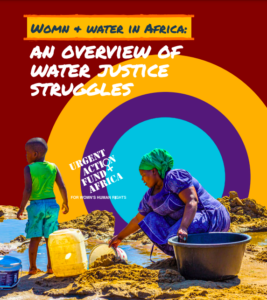
The Urgent Action Fund-Africa (UAF-Africa) launched its report “Womn** and water in Africa: An overview of water justice struggles” as part of a year-long campaign on water availability for womn in Africa. The report responds to the following questions: what are the root causes of water scarcity? What are the approaches employed by organizations toContinue reading “Report | Womn and water in Africa: An overview of water justice struggles”
Report | Intrinsically linked: gender equality, climate and biodiversity
The worldwide climate crisis, loss of biodiversity and continuing gender inequality are intrinsically linked. Solving the climate and biodiversity crises and achieving gender equality must go hand in hand and everyone needs to be involved. Women and girls constitute almost half of the world’s population, but their voices are not sufficiently heard in biodiversity andContinue reading “Report | Intrinsically linked: gender equality, climate and biodiversity”

Report | Structural violence: Learning from women and girl environmental defenders
In their efforts to defend their land, territories and natural resources, women and girl environmental defenders* (WGEDs) around the world are experiencing diverse forms of structural violence. The violence they experience ranges from the physical to the spiritual. From dislocation and dispossession, to harassment and defamation. From sexual and domestic violence to kidnapping and murder.Continue reading “Report | Structural violence: Learning from women and girl environmental defenders”

Report | Critical approaches to gender in mountain ecosystems
Women play a key role in nature conservation, yet they often lack the inputs, technologies, training and extension services, and various enablers and linkages that can enhance the effectiveness of their efforts. Evidence indicates that gender-inclusive and gender-sensitive conservation practices have far-reaching multiplier impacts. This report from the International Union for Conservation of Nature (IUCN)Continue reading “Report | Critical approaches to gender in mountain ecosystems”

Women within the Context of Agricultural Extractivism: Voices of Women Land Defenders in Central America
How does agricultural extractivism affect ecosystems, communities, and women specifically? What are women defenders and their communities doing to guarantee that life is sustainable and stop the destruction of their territories? These are some of the guiding questions behind the collaborative report “Women within Contexts of Agricultural Extractivism: Voices of Women Land Defenders in CentralContinue reading “Women within the Context of Agricultural Extractivism: Voices of Women Land Defenders in Central America”
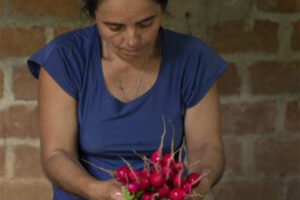
Climate finance is only effective when it is gender just. Read our Call to Action for COP27
The key role of women in climate action and the relationship between achieving gender equality and climate outcomes is widely recognised and documented. Yet the effectiveness of climate finance is often reduced to the measurement of tonnes of carbon mitigated and the amount of private sector finance leveraged, whereas innovation is reduced to creating top-down,Continue reading “Climate finance is only effective when it is gender just. Read our Call to Action for COP27”
Unlocking Public Finance for Agroecology: Catalysing the potential of agriculture in achieving the Sustainable Development Goals
This publication is a collaboration between eight different partners from Latin America, Africa, Asia and Europe that shows how agro-ecological practices on the ground contribute to the Sustainable Development Goals and Paris objectives and why it is important that these types of practices are more supported To access the publication and case studies, please clickContinue reading “Unlocking Public Finance for Agroecology: Catalysing the potential of agriculture in achieving the Sustainable Development Goals”